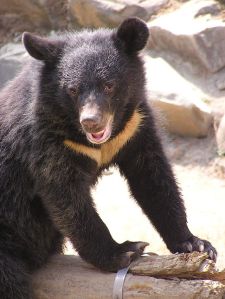
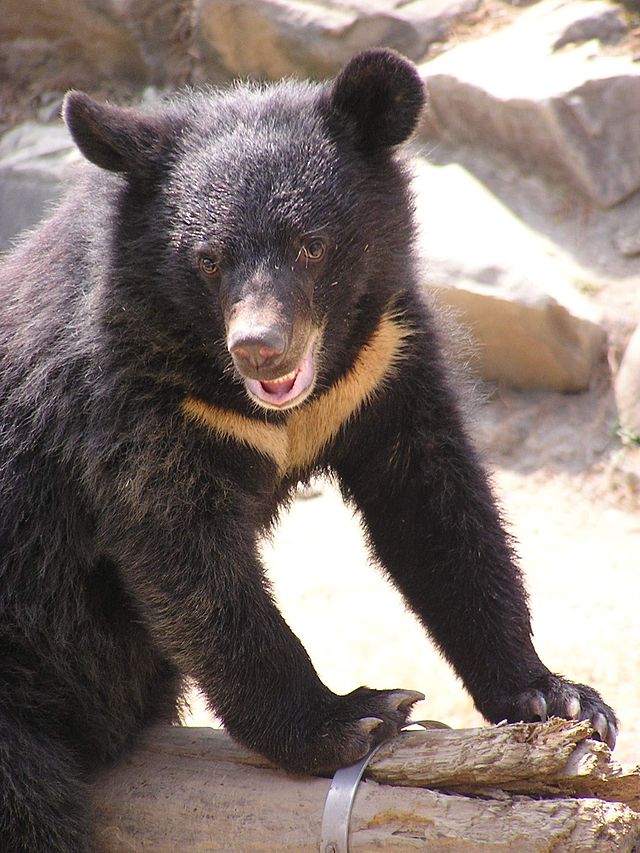
Bear image: “Formosan Black Bear” by Abu0804 – Own work. Licensed under CC BY-SA 3.0 via Wikimedia Commons – https://commons.wikimedia.org/wiki/File:Formosan_Black_Bear.JPG#/media/File:Formosan_Black_Bear.JPG

Bear Flag Image: “Bear Brotherhood flag” by Fibonacci. – Own work. Licensed under CC BY-SA 3.0 via Wikimedia Commons – http://commons.wikimedia.org/wiki/File:Bear_Brotherhood_flag.svg#/media/File:Bear_Brotherhood_flag.svg
For Americans, being overweight has become the new normal (Harvard Medical School, March 1, 2011). The obesity rate has doubled for adults since 1980 (Conniff, November 10, 2010); obesity is now a persistent epidemic (Conniff, November 10, 2010). Two-thirds of American adults are overweight if not obese (Conniff, November 10, 2010).
Obesity is dangerous health problem. Only smoking causes greater risk of cancer (Conniff, November 10, 2010) and obesity is predicted to become the number one preventable cause of death in America, exceeding smoking, the current primary cause (Harvard Medical School, March 1, 2011). Being overweight or obese is a risk factor for a legion of physical health problems (Hassan, Joshi, Madhavan, & Amonkar, 2003). Few conditions are linked to as long a list of chronic disorders known to accompany heavy weight: the chronic disorders linked with obesity, including diabetes, coronary artery disease, erectile dysfunction, congestive heart failure, hypertension, stroke, osteoarthritis, sleep apnea, depression, certain cancers, prostate tumors (Conniff, October 19, 2010), heart attack, stroke, hypertension, gallstones, osteoarthritis, fatty liver, depression, lowered testosterone, fertility impairment, and kidney stones (Harvard Medical School, March 1, 2011). Prostate health is particularly concerning for heavy men. Depending on weight a heavy man’s risk for prostate cancer can increase from 20-34% (Harvard Medical School, March 1, 2011). While each obese person’s health risks will be unique and the result of obesity’s interaction with other factors, researchers generally agree that people are significantly more at risk for serious health issues when they are obese than when they are not (Conniff, October 19, 2010).
Not only is obesity an extensive health problem, it is an expensive one. Ten percent of all American health-care costs in 2008 related to overweight or obesity illnesses, a super-sized $147 billion in costs (Conniff, November 10, 2010). Following American waistlines, costs expanded to $200 billion, or 21% of all health-care costs, in 2014. These costs are predicted to rise to some amount between $43 billion and $66 billion by 2030 (obesitycampaign.org).The problem is not only expensive at the national level but for individuals as well. Obese people may spend as much as 42% more in healthcare than people who have a healthy weight.
Obesity is not only associated with fiscal costs and negative health consequences, but also social and emotional consequences (Jia & Lubetkin, 2005). Heavy people are as likely to experience weight bias, stigma, and prejudice in addition. Weight is a source of discrimination in American society (Hassan et al., 2003) where being slim and fit is considered the ideal (Kraft, Robinson, Nordstrom, Bockting, & Rosser, 2006). Researchers have found that Americans associate obese people with a variety of unflattering and unkind terms like repulsive, unattractive, and lazy (Conniff, October 19, 2010). Overweight and obese people are often ridiculed and taunted overtly and covertly, are the butt of jokes, and are frequently targets for discrimination (Conniff, October 19, 2010).
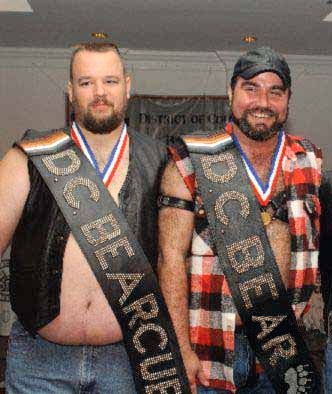
Weight has been associated with a physical ideal for men: thin, toned, and youthful (Manley, Levitt, & Mosher, 2008). Straight and gay American men, indoctrinated with this idealized body norm, feel pressure to conform in their physical appearance; gay men, in fact, have been found to be so concerned about conforming to appearance norms that they can develop unhealthy body dissatisfaction (Morgan & Arcelus, 2009) and eating disorders (WichstrØm, 2006; Yellend & Tiggemann, 2003). Since the 1970s one subgroup of gay males, known as “Bears,” has resisted, adopting a social identity that rebels against the dominant masculine physical ideal perpetuated in straight and gay male culture (Gough & Flanders, 2009). Bears, and younger bears known as “cubs,” are typically obese—or at least stout or overweight—hairy men who embrace their weight, celebrate it, and capitalize on it socially (Gough & Flanders; Hennen, 2005). In fact, for these gay men, Bear social identity has been found to increase self-esteem (Manley et al., 2008). The Bear identity reframes a stigmatized physical trait as an attractive, desirable physical asset, allowing men who have felt marginalized based on violating appearance norms to experience social acceptance (Manley et al., 2008). Often, these men have felt unattractive and isolated from the gay community before discovering the Bear community and adopting Bear social identities (Manley et al., 2008).
Given that Bear identity embraces and celebrates weight and that within the community, weight is even a kind of social asset, weight represents a health paradox for the Bear community: a psychosocial resiliency factor that is also a significant physical health risk factor. This research project will involve partnering with Bears to explore this paradox with the researcher’s goals including better understanding Bears’ health knowledge, health needs, and identifying public health outreach strategies that Bears would receive positively, having greater impact on shaping health changes in the Bear community.
I want to pursue this research because I think this issue is important for a number of reasons: 1) For many Bears and Cubs, this bond they share around Bear identity is incredibly important to them and the Bear community that they are part of is a community that provides them a feeling of inclusion, support, connection, and belonging. And I think it’s important as a social worker to respect and appreciate this community’s identity and strengths. 2) Because Bear identity is so closely tied to weight for many Bears, it places them at risk for serious, chronic health problems–problems which often actually impair their ability to participate in their community as their health worses or through disability or early death. 3) I think it’s important to acknowledge this identity in order to work with this community around health. My sense is that it will be important to think about how to frame weight/obesity not as another “men’s health problem,” but as the “Bears’ health problem” because I think this identity often becomes the one that resonates most loudly for members of this community.
Conniff, R. (October 19, 2010). I hate fat people. Men’s Health. Retrieved from http://www.menshealth.com/weight-loss/i-hate-fat-people
Conniff, R. (November 15, 2010). How a fat nation can slim down. Men’s Health. Retrieved from http://www.menshealth.com/weight-loss/american-slim-down?fullpage=true
Gough, B., & Flanders, G. (2009). Celebrating “obese” bodies: Gay “Bears” talk about weight, body image, and health. International Journal of Men’s Health, 8(3), 235-253.
Hassan, M.K., Joshi, A.V., Madhavan, S.S., & Amonkar, M.M. (2003). Obesity and health-related quality of life: A cross-sectional analysis of the US population. International Journal of Obesity, 27, 1227-1232.
Harvard Medical School. (March 1, 2011). Obesity: Unhealthy and unmanly. Harvard Men’s Health Watch. Retrieved from http://www.health.harvard.edu/mens-health/obesity-unhealthy-and-unmanly
Hennen, P. (2005). Bear bodies, Bear masculinities: Recuperation, resistance, or retreat? Gender and Society, 19(1), 25-43.
Jia, H. & Lubetkin, E.I. (2005). The impact of obesity on health-related quality of life in the general adult US population. Journal of Public Health, 27(2), 156-164. doi: 10.1093/pubmed/fdi025
Kraft, C., Robinson, B.E., Nordstrom, D.L., Bockting, W.O., & Rosser, B.R.S. (2008). Obesity, body image and unsafe sex in men who have sex with men. Archives of Sexual Behavior, 35, 587-595.
Manley, E., Levitt, H., & Mosher, C. (2008). Understanding the Bear movement in gay culture. Journal of Homosexuality, 53(4), 89-112.
Morgan, J.F., & Arcelus, J. (2009). Body image in gay and straight men: A qualitative study. European Eating Disorders Review, 17(6), 435-443. doi: 10.1002/erv.955
Obesitycampaign.org. (n.d.). Obesity facts. Retrieved from http://obesitycampaign.org/
WichstrØm, L. (2006). Sexual orientation as a risk factor for Bulimic symptoms. International Journal of Eating Disorders, 39(6), 448-453. Doi: 10.1002/eat
Yellend, C., & Tiggemann, M. (2003). Muscularity and the gay ideal: Body dissatisfaction and disordered eating in homosexual men. Eating Behaviors, 4, 107-116.
 Bear and seesaw images believed to be Public Domain; jugging attributed to Cliparts.com, public domain)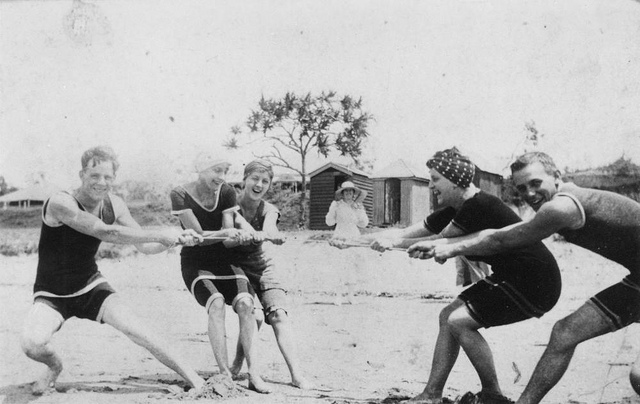



 drmichaelhowellsocialworkprofessor


